Analysis of Nexus Market Link
A comprehensive operational history and technical feature review of the decentralized Nexus Onion service. Examining the evolution from standard escrow systems to walletless payment architecture.
01. Executive Summary
Nexus Market Link represents a significant iteration in the development of darknet market infrastructure. Established as a Tor Hidden Service (V3 Onion), the platform was designed to facilitate the exchange of digital goods and services using cryptocurrency. Unlike previous generations of marketplaces that relied heavily on centralized wallet systems, Nexus Market Link has been observed implementing a hybrid model that emphasizes direct payment flows.
Research indicates that the platform's primary focus lies in digital security and user anonymity. By integrating Monero (XMR) alongside Bitcoin (BTC) and Litecoin (LTC), the architecture prioritizes transaction opacity. The absence of a traditional vendor bond in favor of reputation-based metrics marks a departure from the "pay-to-play" models often seen in similar environments.
"The shift toward walletless pay systems in Nexus Market Link suggests a broader industry trend aimed at minimizing the risk of centralized fund seizure during exit scams or law enforcement actions."
Platform Data
02. Technical Architecture
Walletless Protocols
Nexus utilizes a 'walletless' payment structure for specific vendors. This mechanism forwards funds directly from the buyer to the vendor's designated address upon order confirmation, reducing the quantity of cryptocurrency held in the market's central hot wallet.
PGP Encryption
Pretty Good Privacy (PGP) is enforced for 2FA login and sensitive communication. The platform rejects plaintext shipping information, requiring all sensitive data to be encrypted client-side before submission to the server.
Monero Integration
To combat blockchain analysis, Nexus Market Link heavily promotes Monero (XMR). The implementation uses subaddresses for each transaction, obfuscating the flow of funds and protecting user privacy against surveillance nodes.
03. Interface Analysis
SYSTEM: CAPTCHA CHALLENGE
DDoS Protection Screen
Client-side puzzle challenge to mitigate layer 7 attacks.
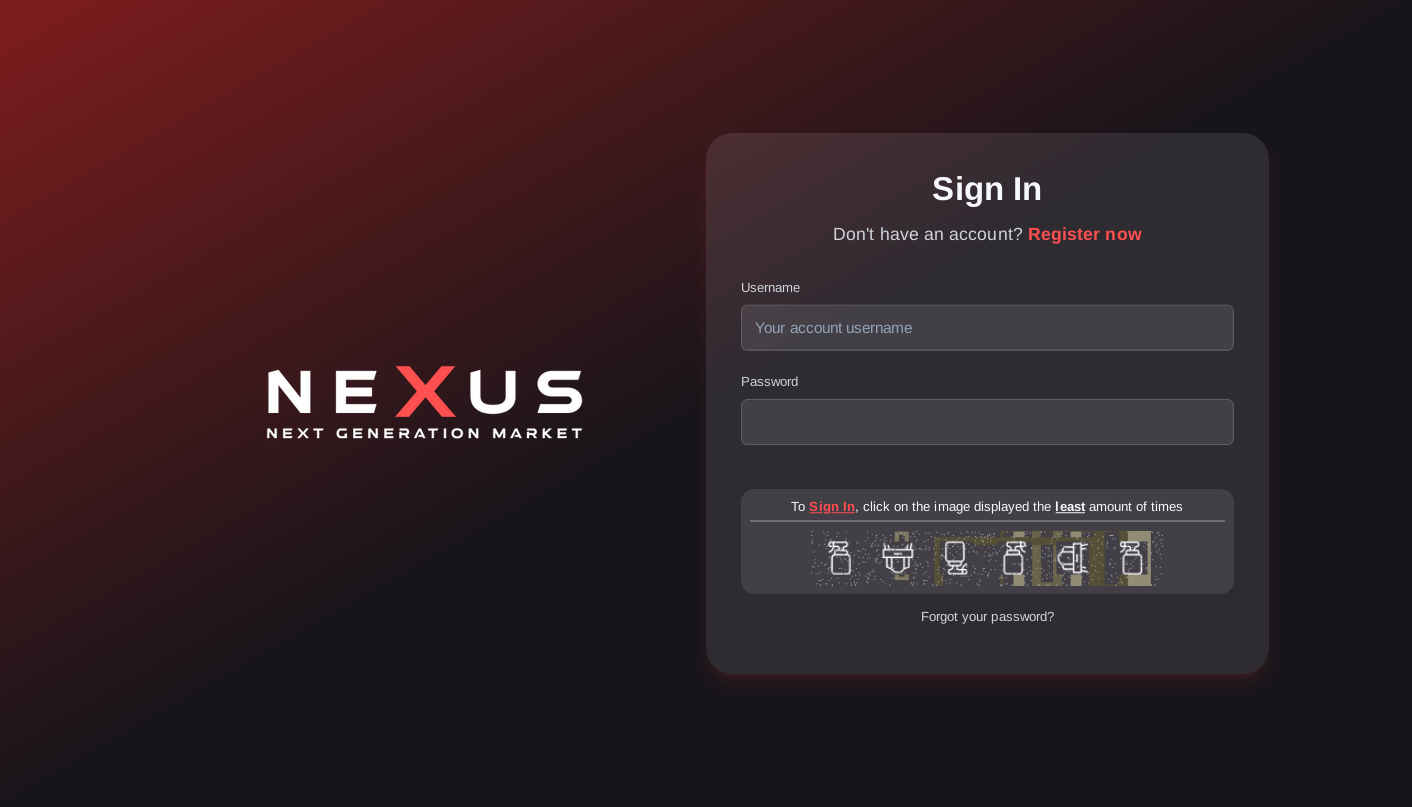
SYSTEM: AUTHENTICATION
User Login Interface
Standard login showing 2FA requirements and mirror verification.
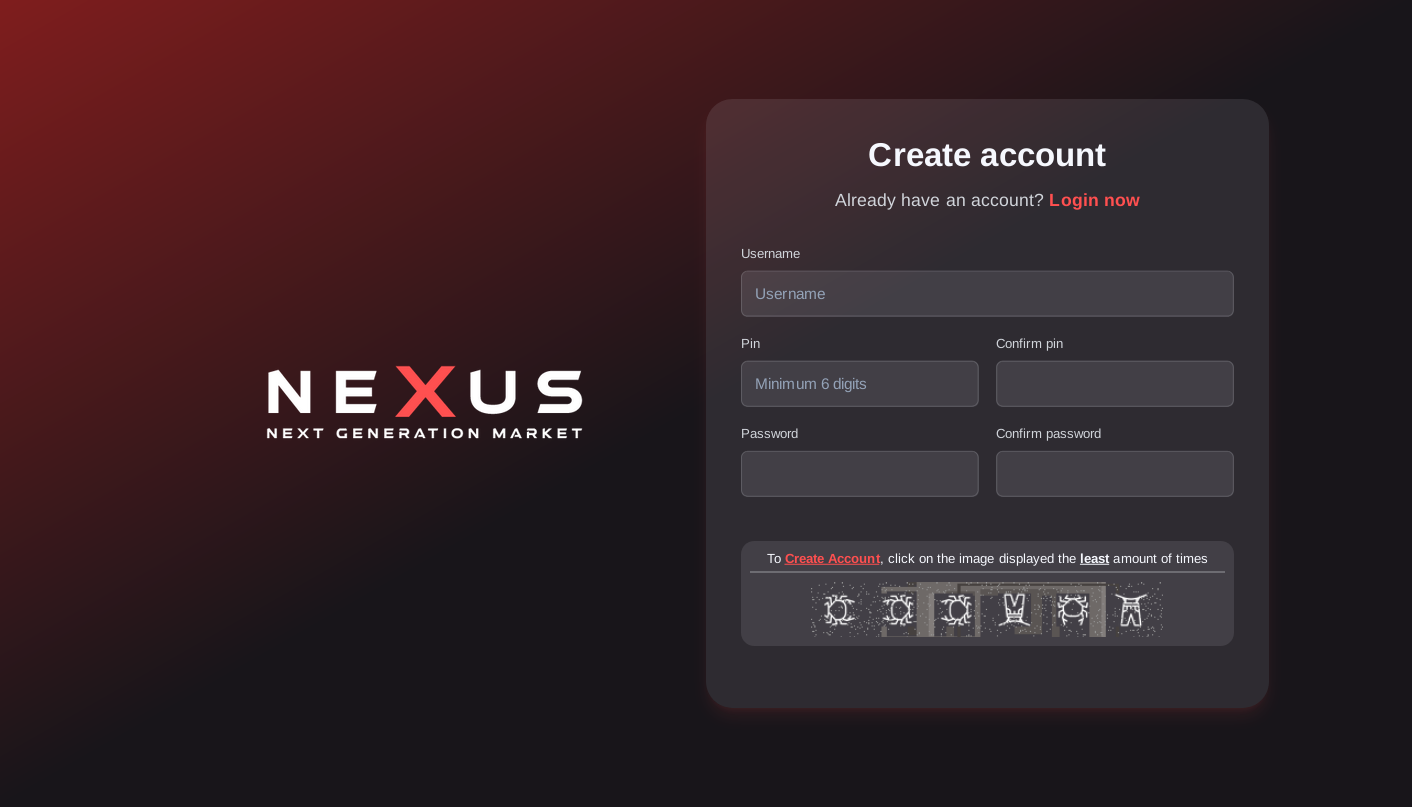
SYSTEM: REGISTRATION
Account Registration Page
Demonstrates the 'No Vendor Bond' signup flow.
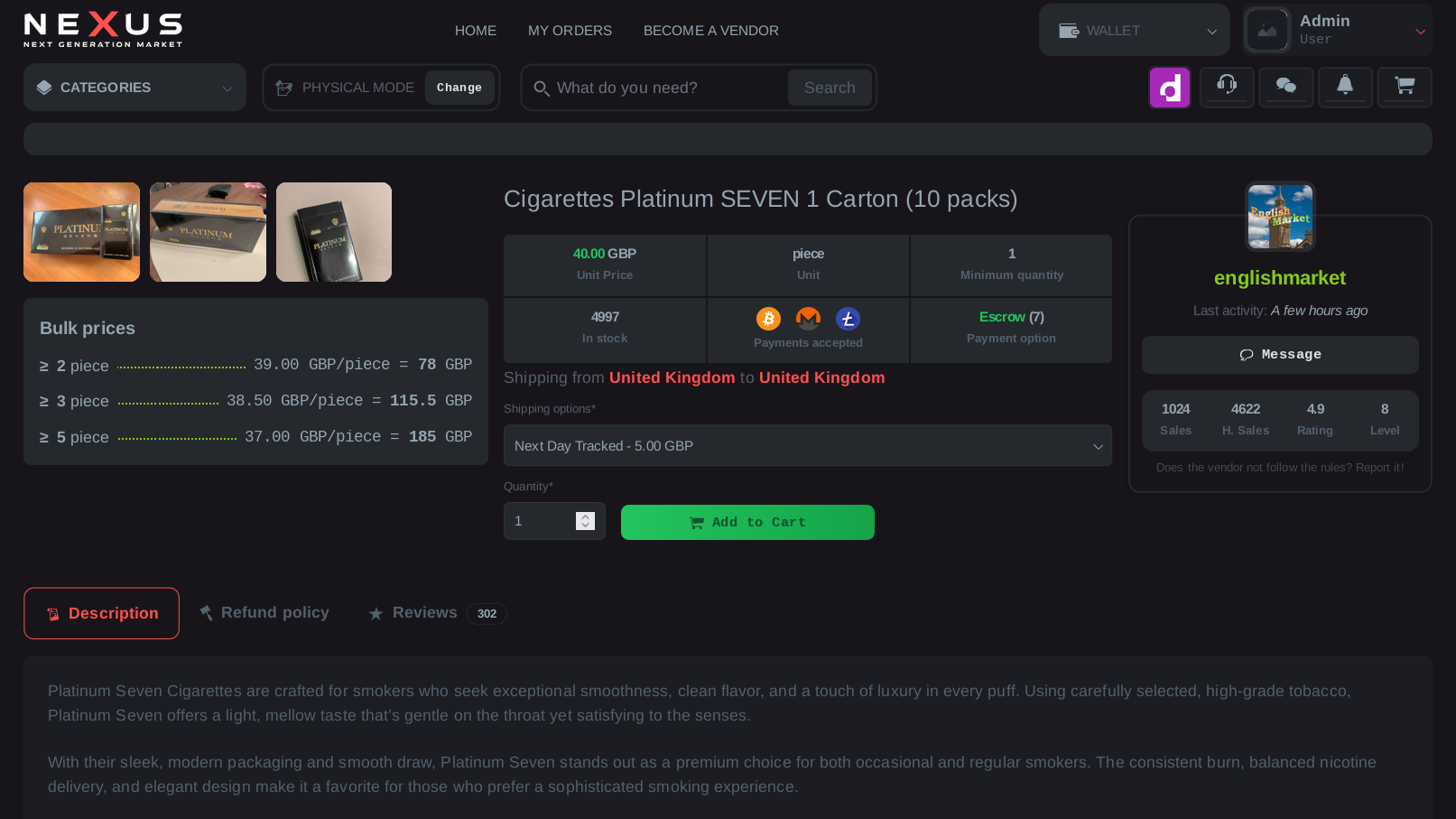
SYSTEM: DASHBOARD
Main Market Dashboard
User interface highlighting category navigation and search.
04. Historical Timeline
Platform Launch & V3 Onion Deployment
Nexus Market Link was established as a Tor-exclusive service. Early architecture focused on basic escrow functionality and Bitcoin support. The initial deployment emphasized a minimalist UI to reduce attack surface.
Integration of Monero (XMR)
Responding to community demand for enhanced privacy, the platform integrated Monero. This update required a significant backend overhaul to handle the unique transaction verification process of the XMR blockchain.
Walletless Pay & Security Hardening
Recent updates introduced the walletless payment system, reducing custodial risk. Concurrent security patches improved anti-phishing measures, including dynamic mirror verification and stricter PGP enforcement for vendors.